Analysis
Antisemitism and Violent Extremism in Europe: An Analysis of Trends and Incidents
30 Jul 2026
Since the coordinated terrorist attacks carried out by Hamas against Israel on 7 October 2023 and the subsequent war in Gaza, European authorities have widely assessed that the terrorist threat facing Jewish communities worldwide has increased significantly. Following the war in Iran which started on 28 February 2026, Europe has again witnessed a wave of antisemitic attacks. Across the ideological spectrum, antisemitic beliefs have been a key driver behind several fatal terrorist attacks. These include the jihadist attack in December 2025 at Bondi Beach in Australia, when two perpetrators opened fire at a Hanukkah celebration, killing 15 and injuring 40, as well as the October 2025 attack in Manchester, United Kingdom, which left two people dead after a perpetrator drove a car into a crowd outside a synagogue and subsequently went on to stab some of the survivors.
Antisemitism also frequently serves as a driver of hate crimes. Although the number of antisemitic incidents was already high prior to October 2023, it surged in the direct aftermath and has remained persistently elevated ever since. Recently, the Dutch National Coordinator for Combating Antisemitism (NCAB) announced that, with 867 registered antisemitic crimes in 2025, the figure was only marginally below the all-time highs recorded in both 2023 and 2024, which each recorded approximately 880 incidents. Similarly, after a record high of 6,236 antisemitic crimes in 2024, the German Federal Criminal Police Office (BKA) registered 5,729 antisemitic crimes in 2025. However, as the figure remains preliminary and reporting delays are common, the final total for 2025 is likely to rise further.
Against this backdrop, the International Centre for Counter-Terrorism (ICCT), together with the Security and Crisis Centre (SACC) of the European Jewish Congress, conducted a one-year monitoring exercise between 1 January and 31 December 2025 of kinetic manifestations of antisemitism across all European Union member states, as well as the UK and Switzerland. Unlike other datasets that highlight the extensive scale of antisemitism online, this monitoring focuses exclusively on offline incidents of antisemitism. This analysis presents initial insights derived from this monitoring. Although our findings show that actual incidents of antisemitic terrorism remain comparatively rare, the above-mentioned examples demonstrate that a persistent terrorist threat nevertheless exists. Accordingly, considering that antisemitism often serves as a bridging narrative across extremist ideologies, the second part of this analysis presents a brief assessment of the main terrorist and violent extremist threats facing Jewish communities in Europe.
Monitoring Results Year 2025
The monitoring framework was based on the International Holocaust Remembrance Alliance (IHRA) definition of antisemitism, which has been adopted by all European Union member states except Malta. To identify relevant incidents, a structured open-source online search was conducted using a range of keyword combinations. Event-specific terms, such as “assault” or “graffiti,” were combined with classifying keywords including “antisemitic” and “Jewish.” The search primarily drew on domestic press reporting, complemented by reports from watchdog organisations, court documents, and official statements where available. Searches were conducted in the respective domestic languages and run on a monthly basis throughout the year. Incidents were categorised into five forms of real-world antisemitism: physical attacks, vandalism, harassment, hate speech, and “other” – the latter serving as an umbrella category for incidents that could not be clearly assigned to the preceding categories. The results of this monthly monitoring form the basis of the dataset for the year 2025, the findings of which are presented below.
In total, 254 incidents were identified over the course of the year. The distribution of incidents was relatively even across the year, with an average of 21 incidents per month. Peaks were recorded in December, with 36 incidents, and in September, with 33 incidents, while the lowest number was recorded in February, with nine incidents. However, the comparatively low figure for February may partially reflect an ongoing recalibration of search terms and methodology during that month. Overall, the pattern demonstrates that antisemitism is not merely an event-driven phenomenon that spikes around specific geopolitical developments, but a persistent feature of everyday life affecting Jewish communities across Europe. Nevertheless, it is important to note that our count likely represents only a partial picture of the actual scale of kinetic antisemitism in Europe. Since our dataset is based exclusively on open-source reporting, it is automatically affected by variations in media coverage which frequently result in the underreporting of incidents, particularly smaller-scale or less visible cases. Moreover, many victims refrain from reporting incidents out of fear of further backlash. National watchdog organisations, which rely on community reporting systems in addition to their own monitoring, consistently document substantially higher numbers. For example, the British Community Security Trust (CST) recorded 2,159 offline antisemitic incidents in 2025 alone, while Żydowskie Stowarzyszenie Czulent in Poland and the Observatorio de Antisemitismo in Spain each recorded around 100 offline antisemitic incidents in their most recent annual reports covering 2024.
Likewise, antisemitic incidents were recorded across all monitored countries. The four most populous European countries, Germany (58 incidents), France (54 incidents), Italy (29 incidents), and the UK (27 incidents) also recorded the highest absolute numbers of cases. Germany and France alone accounted for nearly half of all registered incidents. When adjusting for population size, the picture changes at least in part: France recorded the highest incidence rate, followed by Bulgaria and Greece. There were also notable country-specific variations in the types of incidents observed. Incident types also varied between countries, with physical attacks particularly common in France and vandalism dominating in Italy and the Netherlands.
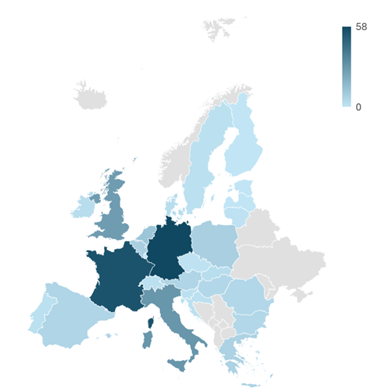
Figure 1: Absolute Incidents per Country
Within our monitoring, actual incidents of antisemitic terrorism were comparatively rare. Throughout 2025, Europe witnessed two executed attacks linked to IS-inspired jihadist terrorism: a stabbing attack near the Holocaust Memorial in Berlin in February, in which the perpetrator later stated that he had intended to kill Jews, and an attack in Manchester in October, when a perpetrator drove a vehicle into a group of worshippers before fatally stabbing one person outside Heaton Park Synagogue. By far the most common category was vandalism, accounting for more than half of all recorded incidents, with 131 out of 254 cases. Acts of vandalism most frequently targeted Holocaust memorials, accounting for 41 incidents. Other common targets included synagogues, with 23 incidents, and Jewish cemeteries, with 11 incidents. Vandalism most often manifested in the form of defacement, such as pouring paint or other substances over objects, and frequently involved graffiti, commonly swastikas or slogans such as “Free Palestine” or “Genocide.” While protests or criticisms of the Israeli government policies are entirely legitimate, these acts were categorised as antisemitic when they deliberately targeted Jewish sites or symbols, thereby holding Jewish communities collectively responsible for the actions of the Israeli government. In addition, vandalism also occurred in the broader public sphere, for example through graffiti on residential buildings, including slogans such as “Death to Jews” or imagery equating the Star of David with a swastika. This was followed by physical attacks, with 48 incidents. Although generally falling short of the threshold of terrorism, a number of these attacks involved weapons, most commonly knives as well as blunt objects such as bottles. In the vast majority of cases, however, assaults occurred spontaneously in public spaces and involved physical violence such as punches and kicks. In many incidents, perpetrators appeared to identify their victims as Jewish based on visible markers, including the wearing of a kippah or a Star of David necklace. Notably, this category also included six attacks directed against rabbis. Furthermore, 40 incidents were classified as hate speech, 21 as harassment, while 14 could not be attributed to any of the predefined categories. Incidents of hate speech included verbal abuse, slurs, and in some cases explicit death threats. To a lesser extent, hate speech also occurred in public settings, such as during demonstrations.
Where reported, we also recorded the presumed motive behind incidents. In 102 cases, a primary motive could be identified. These incidents were driven largely by pro-Palestine sentiments (47) and far-right ideology (42). These motives manifested most frequently in acts of vandalism, such as the defacement of Jewish sites with swastikas or pro-Palestine and anti-Israel slogans, as well as in incidents of hate speech. A further seven incidents were classified as far-left motivated, primarily occurring in the context of demonstrations, while five incidents were assessed as being driven by an Islamist motive. Lastly, one incident was subsequently attributed to the activities of a hostile state actor, namely Russia. As later established by French investigators, Russian intelligence services, as part of a broader hybrid warfare campaign, commissioned several Serbian nationals as so-called disposable agents to carry out the acts. A similar Russian modus operandi had already been observed in Paris on two previous occasions in 2023 and 2024. In these cases, antisemitism was arguably not the primary driver, but rather a tool employed to exacerbate societal polarisation within France.
Finally, we also tracked state legal responses following antisemitic incidents. In approximately 75 percent of cases, the competent authorities opened an investigation. In the remaining cases, this either reflected underreporting or the absence of a formal investigation. In 36 cases, primarily involving assaults or harassment, perpetrators were temporarily detained at the scene. In the case of the terrorist attack in Manchester, the perpetrator was shot dead by police. While authorities generally demonstrated a willingness to investigate incidents, in approximately two-thirds of all cases no perpetrators had yet been identified at the time of writing. Of the 31 cases that proceeded to court, seven resulted in prison sentences, two resulted in fines, and three concluded with acquittals. The remaining cases were still pending due to the relatively recent occurrence of the incidents.
Antisemitic Terrorism Threat
Even though only a relatively small share of the 254 antisemitic incidents was terrorist in nature, the terrorist threat facing Jewish communities in Europe is nevertheless considered significant, as notably illustrated by the security measures around Jewish sites in Europe, and spans across multiple ideological milieus.
As demonstrated by the recent series of attacks in Europe carried out by the newly established group Harakat Ashab al-Yamin al-Islamia (HAYI), presumably linked to Iran, state-backed terrorism constitutes a significant threat to Jewish life in Europe. Of the eighteen attacks claimed under the banner of HAYI since early March 2026, twelve targeted Jewish institutions, including the stabbing of two Orthodox Jews in London. In early May 2026, Turkish authorities, on behalf of the US, arrested Iraqi citizen Mohammad Baqer al-Saadi, an alleged senior operative of the pro-Iranian Iraqi militia Kata'ib Hezbollah. According to the charges against him, he orchestrated the attacks claimed by HAYI, as well as several other attacks in Europe and the US, on behalf of Iran’s Islamic Revolutionary Guard Corps (IRGC). Historically, Iranian intelligence services, particularly the IRGC and the Iranian Ministry of Intelligence and Security (MOIS), have been highly active in Europe, with at least 54 plots documented between 2021 and 2024 alone, many targeting Jewish and Israeli individuals or sites. In one recent case, German authorities charged two men with planning arson and assassination attacks in Berlin on behalf of the IRGC, including plans to kill the president of the Central Council of Jews in Germany and the head of the German-Israeli Society.
At present, however, the greatest antisemitic terrorist threat arguably stems primarily from jihadist terrorism. Jihadist groups such as al-Qaeda and IS swiftly sought to capitalise on the 7 October attack and the subsequent war in Gaza by aligning their messaging accordingly, resulting in a significantly increased propaganda output. The Afghanistan-based IS affiliate Islamic State Khorasan Province (ISKP), for instance, devoted several issues of its flagship publication Voice of Khorasan to inciting attacks against Jewish communities. However, messaging specifically tailored to the war in Gaza remained fragmented across different jihadist groups and failed to achieve the same level of resonance as the propaganda disseminated by the Axis of Resistance. Nevertheless, several jihadi attackers referenced the situation in Gaza as one justification for their actions, including the preparators of the attacks in Manchester and Bondi Beach.
While Hamas has focused its terrorist campaign primarily on Israel, it has also sought to extend its operational reach to Europe by directly targeting Jewish and Israeli interests. In the immediate aftermath of 7 October, Hamas attempted to activate previously dormant operational networks in Europe, including through foiled plots in Germany and Denmark in late 2023. This threat has not diminished since, as underscored by another counter-terrorism operation in Germany in October 2025, during which authorities foiled another Hamas-linked plot to carry out firearms attacks against Israeli and Jewish targets.
At the same time, Jewish communities have historically also been targeted by extreme right terrorism. Although no recent mass-casualty attacks against Jewish targets have been recorded in Europe, authorities have foiled dozens of extreme-right terrorist plots targeting synagogues and other Jewish institutions. In 2025, for instance, British authorities arrested a teenager who, after joining the terrorist group The Base, allegedly planned to attack a synagogue. Similarly, in 2025, German authorities disrupted a plot by a 19-year-old extremist who reportedly intended to attack the synagogue in Halle, potentially timed to coincide with the sixth anniversary of the 2019 Halle attack, in which the perpetrator fatally shot two bystanders after failing to force entry into the synagogue. Many of these plots were linked to the militant accelerationist milieu, especially the Terrorgram Collective, a loose network of extreme-right terrorist channels primarily active on Telegram that glorify previous attackers and encourage further violence. For instance, although the two perpetrators of the shooting attack in San Diego in May 2026 ultimately targeted a mosque, they cited a wide range of deeply antisemitic narratives in the manifesto they uploaded shortly before carrying out the attack. Furthermore, antisemitism and the praise of antisemitic terrorist attacks have also been observed within nihilistic violent extremist (NVE) online spaces, although no documented antisemitic plots linked to this milieu have so far been observed in Europe.
Lastly, with regard to the extreme left in Europe, antisemitism is often intertwined with anti-Israel sentiment. Since 7 October, several attack claims and demonstrations have invoked the war in Gaza, with some featuring openly antisemitic rhetoric and isolated acts of violence, although generally falling short of the terrorism threshold. In 2025, following a series of acts of vandalism and property destruction, the British government proscribed the pro-Palestinian network Palestine Action as a terrorist organisation, although this designation was recently ruled unlawful. Overall, left wing extremist antisemitism has primarily involved vandalism and property damage, while indiscriminate mass-violence plots currently appear unlikely.
Conclusion
Antisemitism remains a persistent challenge across Europe. Its prevalence in the online sphere, both in terms of the vast volume of antisemitic content circulating daily and the deep misanthropy, is well documented by initiatives such as the European Observatory of Online Hate. However, our monitoring demonstrates that antisemitism also frequently manifests itself through real-world incidents. It cuts across ideologies and serves as a crucial driver of violent mobilisation across the extremist spectrum. As such, countering antisemitism should be regarded as a central priority within broader efforts to prevent and counter violent extremism (P/CVE).
Although incidents of antisemitic terrorism remain comparatively rare, this should not obscure the broader climate of insecurity affecting Jewish communities across Europe. Everyday manifestations of antisemitism, from graffiti and verbal abuse to discrimination in public spaces, contribute to a persistent atmosphere of fear and marginalisation. A 2024 survey of Jewish communities in Europe found that 96 percent of respondents had experienced antisemitism during the previous year. Moreover, 80 percent expressed concerns for their own safety and that of their families, while more than two-thirds reported concealing their Jewish identity in everyday life.
Against this backdrop, it is essential that policymakers and civil society actors adopt a clear and proactive stance against all forms of antisemitism. This includes not only consistently speaking out antisemitic behaviour, but also strengthening policies aimed at protecting Jewish life as part of European societies. As part of this effort, ICCT and SACC will continue their monitoring in the context of the EU-funded SENTINEL project.
This article represents the views of the author(s) solely. ICCT is an independent foundation, and takes no institutional positions on matters of policy unless clearly stated otherwise.
Photo credit: MAXSHOT.PL / Shutterstock